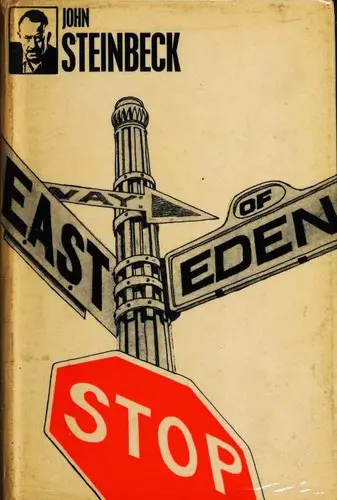
East of Eden
Decide its fate
The record
Time
An eveningA season613 pages, about 12 hours: the length of 1.9 typical books on the shelf.
Getting in
Walk right inSteep climbOne reader reports skepticism through the first 40 to 50 pages, before the Salinas Valley description gives way to any character.
What it gives
Plot and actionIdeas to live byIn 15 reviews from critics and book blogs, 4 credit the plot and 11 credit the ideas or a change in how they live.
One of a kind
Others do thisNothing else doesThree commenters on a book blog call Steinbeck’s The Grapes of Wrath, at 544 pages against this book’s 613, a shorter and better read.
The case for it
on the opening chapter
“One of the greatest first chapters in all of literature”
a Substack review on Cathy’s introduction
“Her first chapter made me genuinely nauseous and the hits just kept coming”
a Substack review on the puzzle
“keeps you wondering how the details unfold, making it feel like you’re solving a puzzle”
a Substack review on start to finish
“It compels and holds the reader’s fascinated attention from the first chapter to the last”
Unsigned review · The Washington Post, 1952
The case against
on the structure
“Clumsy in structure and defaced by excessive melodramatics and much cheap sensationalism”
Unsigned review · The New York Times, 1952 on Cathy Ames
“She personified pure evil and had not a single redeeming feature other than beauty”
a Substack review on the length
“This book did not need to be over 700 pages long”
a book blog on the story’s believability
“some things that happen or fail to happen are rather unbelievable”
a Substack review