Non-Fiction
What actually happened, told by people who were there.
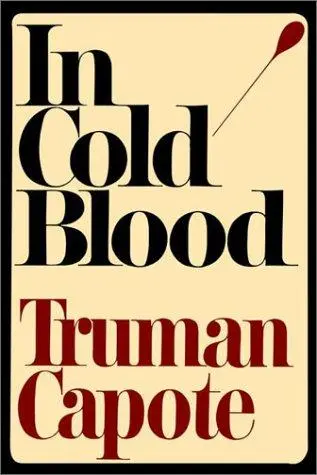
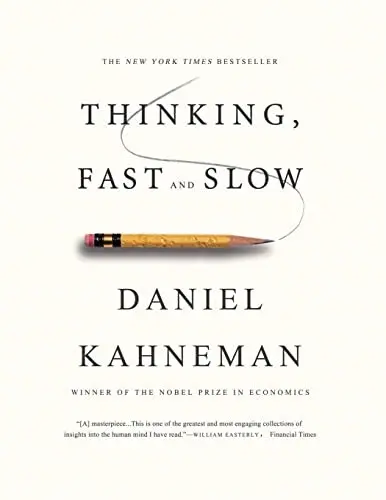
Everything in this wing actually happened, which should worry you more than it does. Capote invented the nonfiction novel and muddied every fact he touched; In Cold Blood is shelved here as literature and as a warning. Diamond will explain the last thirteen thousand years in one sweep; read Guns, Germs, and Steel, then read its critics, then decide. Kahneman spent a career proving your judgment lies to you, and some of the studies he trusted later failed to replicate, which rather proves the point. I shelve the arguments, not the conclusions. If you want books that agree with you, you want a different library. Come in when you would rather be corrected.
The nonfiction label is the fight. Interior thoughts and private conversations no one witnessed are rendered as fact, and the closing graveyard scene, which Capote later admitted never happened, has readers concluding “the novel is ultimately a LIE” and that “NOTHING in this book can be trusted as having been true.” One reader's rule for the padded front hundred pages is blunt: “if it's not important, cut it out.” Some read a real bias toward Smith, who gets more psychological depth than the victims do. And readers arriving from the film report “it's nothing like the movie,” quieter and more literary than the reputation implies, with an ending that “felt too perfect.”
— against In Cold Blood
It restates the domestication argument chapter after chapter, “beating a dead horse,” and readers joke the title oversells, that the honest one would be “Germs, More Germs and a bit about Steel and Guns, but not very much on those last two really.” It “reads more like a lengthy scientific essay than a non-fiction book aimed at the general public.” Historians push hard on the geographic determinism, calling the whole “an exercise in speculation masquerading as fact,” and readers flag “the douche-y social Darwinist parts.” A 2024 study found “no support for his argument that key areas of Eurasia are more ecologically homogeneous,” concluding “chance, and perhaps factors that promoted colonial empires, need to be more seriously considered.”
— against Guns, Germs, and Steel
Post-2011 readers name the priming chapter as the one that aged worst: the Florida-effect walking study and the money-priming experiments failed to replicate, ego depletion went the same way, and Kahneman wrote that “disbelief is not an option” before later admitting he had trusted underpowered work. Beyond that, readers say it “circles back around to the same discussions over and over” and “overstays its welcome by a few hundred pages,” the “endless algebraic word problems” of Linda and the base rates the exact place they start skimming. Some find “most of the things he talked about were obvious anyway,” and it diagnoses biases exhaustively while giving almost nothing usable for correcting your own.
— against Thinking, Fast and Slow
These 63 works open with Pro.