Short Stories
Thirty pages. No room for filler.
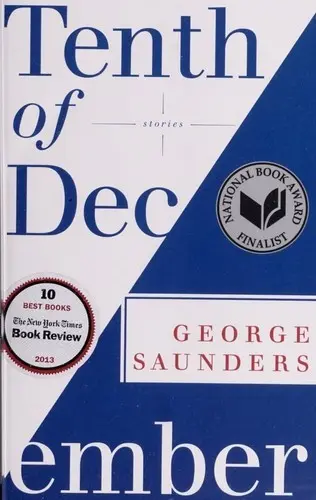
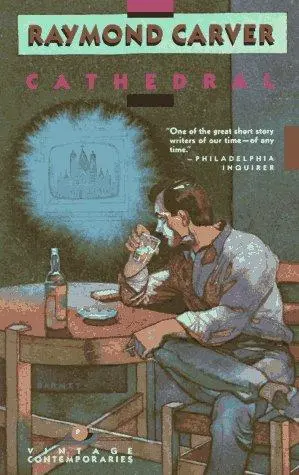


The short story is the only form judged by what it leaves out. Carver cut until the silence did the talking; Cathedral is in this wing and its last page will follow you around. Borges built infinite libraries in eight pages. Chekhov ruined every writer who came after him by making it look effortless. People treat this shelf as a warm-up for novels; they have it backwards. A novel forgives a slow chapter. A story dies of one weak sentence. Read one a night, no more. They are built for the space between days, and the good ones expand there like something dropped in water.
Twelve stories share the same cast in different clothes, failing marriages, heavy drinking, stalled men, until it reads to some as one story told twelve times. Readers who find the prose thin call it “very basic, lacking depth,” and more than one flags it as “too monotonous in themes across these twelve stories.” A Small, Good Thing loses skeptics specifically at what one reader calls “the baker-stalker nonsense,” a subplot that reads as a tonal swerve rather than added weight. One audiobook listener expecting the comic moments to land said flatly it was “supposed to be a comedy but I did not laugh once.” The blind man in the title story functions mainly as a device for the narrator's growth, and the ambiguous, stoned epiphany that closes it leaves plenty of readers unconvinced anything actually changed.
— against Cathedral
Not every story here earns its length. Al Roosten centers on a title character nobody finds compelling enough to carry a whole piece, and My Chivalric Fiasco, set at a Renaissance fair, strikes several readers as the oddest, weakest entry in the book. Escape from Spiderhead has the strongest premise but too little room to develop it: one reader admits “I wanted character development and back story” the short form never gives. Early pieces read as showy before the collection settles down, one reviewer saying flatly “Saunders writes in an extremely pretentious manner,” and another that they “failed to find or feel a connection with most of these stories.” Even the title story splits opinion, with one reader admitting “I kind of thought it was sappy” next to its harder-edged neighbors.
— against Tenth of December
The philosophical density beats some readers outright: “many of the stories flew over my head,” one admits, and another puts it more bluntly, “Borges is just way too smart for me.” A harsher critic accuses him of leaning on obscure references to signal cleverness rather than earn it, dismissing several pieces as “pedantic, mediocre pieces of short fiction.” The prose itself splits readers too, striking some as overwrought rather than precise. A story built on a runner-never-reaching-a-destination paradox gets waved off by one critic as a puzzle stunt rather than fiction, someone better off buying a Sudoku book instead. Even a sympathetic reader concedes the collection “very rarely attempts to engage your emotions,” staying in pure intellect from start to end.
— against Labyrinths
These 78 works open with Pro.