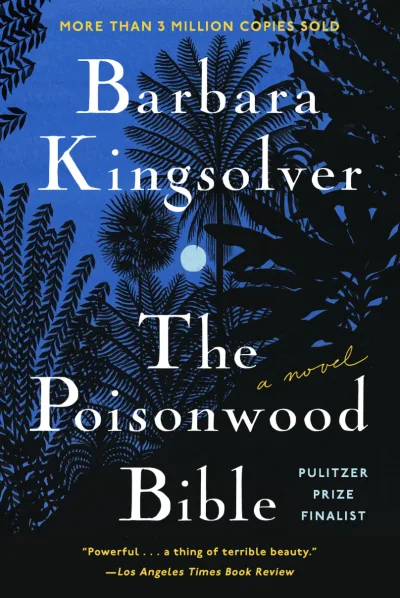
The Poisonwood Bible
Decide its fate
The record
Time
An eveningA season576 pages, about 12 hours: the length of 1.8 typical books on the shelf.
Getting in
Walk right inSteep climbTwo readers report a slow opening, and one says it does not pick up until halfway through.
What it gives
Plot and actionIdeas to live byIn 20 reviews from critics and book blogs, 8 credit the plot and 13 credit the ideas or a change in how they live.
One of a kind
Others do thisNothing else doesOne book blog compares its sisters to those of Little Women, and another recommends it to readers who liked The Great Alone.
The case for it
on the characters
“breathing, fallible human beings”
Kirkus Reviews, 1998 on the Price girls
“Ms. Kingsolver does a nimble job of delineating the Price girls’ responses to Africa”
Michiko Kakutani · The New York Times Book Review, 1998 on Brother Fowles
“we meet Brother Fowles, a missionary who preaches love and is loved in return”
five stars · a book blog on Adah’s narration
“Her inner dialogue is rich and sad, and had me in tears more than once.”
five stars · a book blog
The case against
on the last 150 pages
“the last 150 were an incredible disappointment”
a book blog on the length
“The Poisonwood Bible ought to be about 200 pages shorter.”
a book blog on Nathan Price
“Kingsolver works so hard to keep Nathan from being a fully realized character”
Timothy Larsen · Christian Scholar's Review, 2026 on the later chapters
“the characters become mouthpieces for not particularly fresh statements about the abuses of colonialism”
Ron Charles · The Christian Science Monitor, 19 November 1998