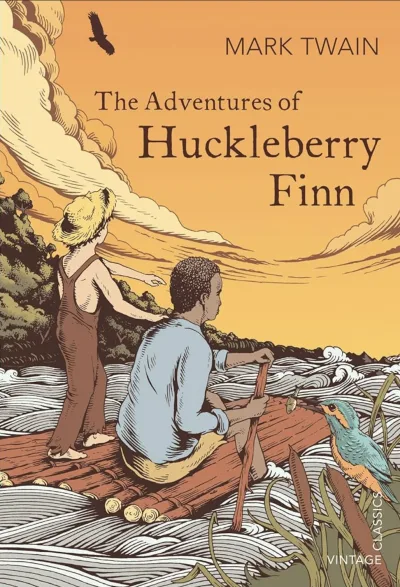
The Adventures of Huckleberry Finn
Decide its fate
The record
Time
An eveningA season316 pages, about 6 hours: about the length of a typical book on the shelf.
Getting in
Walk right inSteep climbOne reader found the opening five chapters boring.
What it gives
Plot and actionIdeas to live byIn 11 reviews from critics and book blogs, 4 credit the plot and 6 credit the ideas or a change in how they live.
One of a kind
Others do thisNothing else doesOne blog hears The Catcher in the Rye in it, and another ranks Twain’s own Tom Sawyer above it.
The case for it
on the dialect
“The Adventures of Huckleberry Finn must be pronounced the most amusing book Mark Twain has written for years. It is a more minute and faithful picture of Southwestern manners and customs fifty years ago than was Life on the Mississippi, while in regard to the dialect it surpasses any of the author’s previous stories in the command of the half-dozen species of patois which passed for the English language in old Missouri.”
Unsigned review · The San Francisco Chronicle, 15 March 1885 on Huck and Jim
“the connection between Huckleberry and Jim and the adventures they went on together”
a book blog on helping Jim
“Huck decides that if helping Jim means that he goes to hell”
a book blog on the vernacular
“an excellent job of making the dialect of the story authentic and yet still accessible”
four stars · a book blog
The case against
on the length
“Mark Twain’s Adventures of Huckleberry Finn had a certain relishable flavor when mixed up with the miscellaneous assortment of magazine literature; but in a book form, and covering more than 350 pages, they are wearisome and labored. It would be about as easy to read through a jest book, as to keep up one’s interest in the monotonous humor and the dialectic variations of ‘Huck Finn’s’ narrative.”
Unsigned review · The Boston Daily Advertiser, 12 March 1885 on the racial slur
“the ‘N’ word was repeated more than 200 times”
a book blog on the final chapters
“someone just pricked the balloon”
a book blog on Tom Sawyer
“he literally tried to start a murder cult”
a book blog