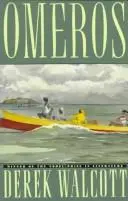
Omeros
The Caribbean epic. Walcott's Homeric reworking of the Iliad and Odyssey in the context of St. Lucia's fishermen, their colonial history, and the poet's own divided heritage (African and European). A 325-page poem in terza rima that competes directly with its classical models and wins on its own terms. Nobel Prize 1992. Walcott spent his entire career asking what poetry could be made from the wreckage of colonialism; Omeros is his answer.
Readers most often report losing the thread: finishing whole sections unsure what happened, scene, time, and speaker shifting with no signposting, one admitting, “had no idea what was going on for majority of the poem.” A roughly 300-page book takes some readers far longer than the page count implies, one reporting it “took me nine months,” and more than one leaned on outside plot summaries just to keep up. Helen herself stays an object fought over by men rather than gaining real interiority, a shortfall several readers flag given the book’s ambitions. Readers who don’t normally read poetry name the density of metaphor and Walcott’s autobiographical digressions as the parts that lose them, finding the self-reflective stretches indulgent next to the island story. One review wraps up the frustration: “I didn’t really understand this.”
The case for it and the rest of the canon open with Pro.