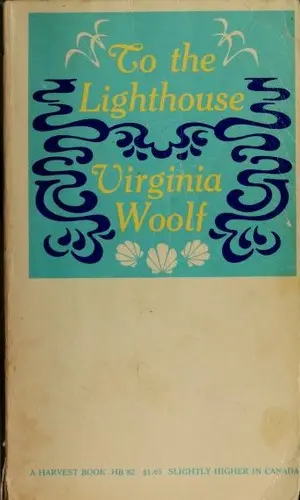
To the Lighthouse
Decide its fate
The record
Time
An eveningA season242 pages, about 5 hours: three-quarters the length of a typical book on the shelf.
Getting in
Walk right inSteep climbFour readers report difficulty at the start, one naming the first fifty pages as where they nearly stopped.
What it gives
Plot and actionIdeas to live byIn 13 reviews from critics and book blogs, 2 credit the plot and 8 credit the ideas or a change in how they live.
One of a kind
Others do thisNothing else doesA reader recommends starting with Mrs Dalloway, on the shelf at 224 pages, as the easier way into Woolf.
The case for it
on the Time Passes section
“What this resulted in was a haunting sense of bereft-ness.”
a book blog on the characters
“revealed by degrees like a Polaroid”
a book blog on Lily Briscoe
“Then there’s Lily Briscoe, the perfect counterpoint to Mrs Ramsay.”
five stars · a book blog on the prose
“It’s like reading long form poetry”
a Substack review
The case against
on the final section
“The long opening portion seems to be carrying you ahead toward something which will be magnificently expressive, and then this final portion becomes obscure, a matter of arcs, of fractions, of uncoordinated notes. By comparison with the rest this final portion seems pale and weak.”
Louis Kronenberger · The New York Times, 8 May 1927 on the sentences
“sometimes German in its refusal to resolve until the final word”
a book blog on the plot
“If you read for plot, there is little for you.”
a book blog on the final chapters
“taking two of his children to the lighthouse, seemed interminable.”
a book blog