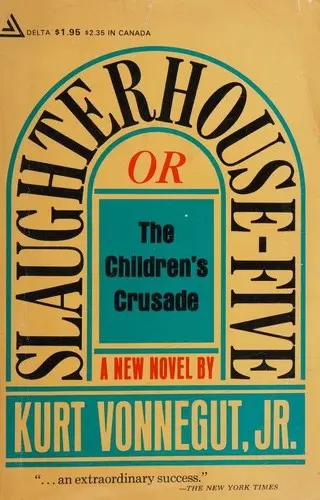
Slaughterhouse-Five
Decide its fate
The record
Time
An eveningA season275 pages, about 6 hours: four-fifths the length of a typical book on the shelf.
Getting in
Walk right inSteep climbThe opening chapter is Vonnegut’s own account of struggling for decades to write about Dresden; Billy Pilgrim’s story begins in chapter two.
What it gives
Plot and actionIdeas to live byIn 15 reviews from critics and book blogs, 2 credit the plot and 11 credit the ideas or a change in how they live.
One of a kind
Others do thisNothing else doesA 1970 Guardian review measures it against Heller’s Catch-22, 463 pages, and a book club chose between it and Vonnegut’s Cat’s Cradle, 231 pages.
The case for it
on the fire storm
“it is precise jumble and jangle, disconcerting and ultimately devastating.”
Kirkus Reviews, 1969 on the prose style
“It is beautifully done, fluid, smooth, and powerful.”
Michael Crichton · The New Republic, 1969 on the war movie scene
“There’s an amazing passage where Billy watches an old war movie on television.”
a book blog on the emotional whiplash
“can make your eyes wobble in utter confusion”
a Substack review
The case against
on the female characters
“the female characters in the book lack depth and conform to stereotypes.”
a Substack review on the flat sentences
“deliberate simplicity is as hazardous as the grand style, and Vonnegut occasionally skids into fatuousness.”
Susan Lardner · The New Yorker, 1969 on the pacing
“It is confusing, redundant and plays no games of building suspense.”
a book blog on the self-indulgence
“the most unsurprising, self-indulgent little books ever to work so hard at being selfless”
Jack Richardson · The New York Review of Books, 1970