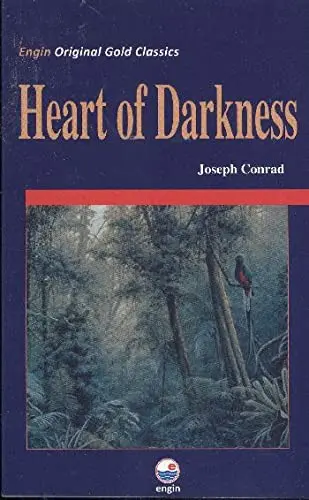
Heart of Darkness
Decide its fate
The record
Time
An eveningA season136 pages, about 3 hours: half the length of a typical book on the shelf.
Getting in
Walk right inSteep climbFive men are aboard the Nellie, anchored on the Thames, when Marlow begins his story.
One of a kind
Others do thisNothing else doesA blog review notes that its supporters call it a modern Moby-Dick, which sits on the shelf at 625 pages.
The case for it
on the author’s talent
“On reading ‘Heart of Darkness’ on its appearance in ‘Blackwood’s Magazine’ our first impression was that Mr. Conrad had, here and there, lost his way. Now that the story can be read, not in parts, but from the first page to the last at a sitting, we retract this opinion and hold ‘Heart of Darkness’ to be the high-water mark of the author’s talent.”
Unsigned review · The Academy and Literature, 6 December 1902 on the prose
“the prose is light and impeccable”
a book blog on the length
“it’s a quick read if you want a short classic between chunky, hunky classics”
a book blog on colonialism in Africa
“an excoriating study of the horrors of colonialism in Africa”
five stars · a book blog
The case against
on the paragraphs
“the paragraphs are very long and dense, which really made it hard for me”
three stars · a book blog on Marlow’s narration
“Marlow also jumps forward from time to time, leaving linking bits of the story unsaid”
five stars · a book blog on the African characters
“near constant use of the ‘N’ word as a synonym for the Africans”
Regan McMahon · Common Sense Media, 2019 on the African setting
“Africa as setting and backdrop which eliminates the African as human factor.”
Chinua Achebe · 'An Image of Africa: Racism in Conrad's Heart of Darkness,' 1975