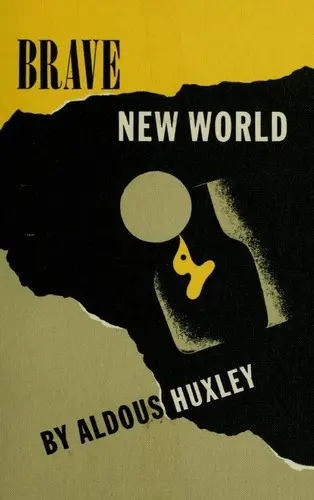
Brave New World
Decide its fate
The record
Time
An eveningA season240 pages, about 5 hours: three-quarters the length of a typical book on the shelf.
Getting in
Walk right inSteep climbA tour of the Central London Hatchery and Conditioning Centre, led by the Director, comes before any character is introduced.
What it gives
Plot and actionIdeas to live byIn 12 reviews from critics and book blogs, one credits the plot and 10 credit the ideas or a change in how they live.
One of a kind
Others do thisNothing else doesGeorge Orwell’s essay on Zamyatin’s We says Brave New World was partly derived from it and calls We the superior book.
The case for it
on the last pages
“the last three pages were so powerful and so well written”
a book blog on the World State
“book is an inescapably complex invitation into a world both highly seductive and dangerously dark”
a book blog on the humor
“Brave New World surprised me with its witty humor and snark.”
a book blog on the five characters
“contains insight and wonder as five distinctive characters arc with clever plot tie-ins and twists.”
a Substack review
The case against
on Lenina’s resistance
“taking an unearned and mean-spirited revenge on Lenina”
David Leon Higdon · International Fiction Review, 2002 on Bernard Marx
“Bernard Marx is no Winston Smith”
a book blog on the characters
“many of the characters have a kind of flat, uninteresting texture to them”
a book blog on the plot
“the plot is a desultory drift down ‘Lazy River.’”
a Substack review